

The Way to War
Captain Clifford’s route would take the Ruapehu across the Pacific and then the Atlantic—weather and coal consumption permitting. The plan called for a first stopover at Montevideo, Uruguay, around 10 January to refuel, then a second at Tenerife in the Canary Islands on 28 January, before making for Great Britain along the western coasts of Portugal and France.
On the tunnellers’ departure, the government cabled a message to the port of Montevideo announcing that more than 440 New Zealand soldiers were en route aboard the Ruapehu and that their passage was to remain secret. The ship set course for Cape Horn and was steaming across the Pacific at a speed of around fourteen knots. The men’s daily routine was organised as soon as they sailed. Their officers had planned the entire voyage, from the programme of military training to maintenance duties. Jim and his comrades were not going to have time to be bored.[1]
For Jim, who did not have sea legs, the first three days on board were sheer torment. Struck down by seasickness, the poor man could nonetheless rely on Lofty and other sympathetic comrades in his team to look after him.[2] He had no choice but to adapt to life at sea, since the voyage was to last forty-seven days. Nauseated, Jim tried to listen to the ship’s safety briefing. He struggled to follow the instruction on the use of the lifejacket and emergency procedures. Fortunately for him, the briefing was repeated regularly during the crossing. Rank determined where you slept and what you used. Jim and Lofty were in third-class bunk cabins; George and Gerald in new quarters hastily fitted out along the promenade deck. Sergeant Clarke occupied second class with the other sergeants, while Lieutenant Wigley and the rest of the officers had first class to themselves. The ship’s toilets were reserved for officers; other ranks made do with flush latrines on the after deck, with access to the washrooms limited to two windows each day—5.30 to 8.00 in the morning and 16.00 to 18.00 in the afternoon. The rest of the day, fresh water was turned off to conserve supplies. Each day, one tunneller was appointed to maintain the lavatories. Once a week, the washrooms were requisitioned for laundry, starting with the men of Section 1 on Mondays. When the weather allowed, washing was hung on long lines strung across the deck, creating the curious sight of trousers and shirts flapping in the wind.
Each morning, the day’s timetable—managed by an officer and two NCOs—was posted outside the ship’s information-and-complaints room and in other strategic places around the vessel.[3] Any ignorance of the daily programme was sharply rebuked. Training schedules, lessons and all other activities had to be followed to the letter. Only Sundays, as well as Christmas and New Year’s Day, were declared rest days. As the Ruapehu steamed eastward, time became an abstract notion, so the ship’s clock was put forward and the new time announced to the men each day.[4] Gymnastics sessions were organised every morning after breakfast to maintain the fitness gained at Avondale. The ship’s confined space did not lend itself to physical activity, even though close-order drill continued in small groups, as did rifle exercises. Classroom and practical instruction naturally took a more prominent place in the tunnellers’ training. These classes were introduced on Major Duigan’s initiative, since he had been entrusted with organising the timetable during the long crossing. For many units, the voyage marked a break between two training periods—the one completed in New Zealand and the one undertaken on arrival in Britain—during which men lost fitness and discipline.[5] The tunnellers were not left to their own devices: from reveille to lights out, they were supervised by their officers and NCOs. Discipline was maintained by punishing the most recalcitrant and by reinforcing the rules through a daily fifteen-minute lesson throughout the first week on board. More even than Major Duigan, Captain Clifford, master of the Ruapehu, had full authority to maintain order and ensure the safety of his ship and its passengers. He handled the tunnellers with tact and understanding, earning genuine affection from them.[6] The tone even turned to humour. Clifford was very attached to a number of hens carried on board. He often spoke of their prowess, boasting that they laid the finest eggs. Some mischievous tunnellers slipped hard-boiled eggs into the cage, and Captain Clifford’s pride—when he discovered the trick—proved short-lived.[7]
Initially focused on the men’s duties on board, the classes quickly broadened to other subjects, from military strategy to military history. Taught by an officer, they lasted between thirty and forty-five minutes; none exceeded an hour. The officers understood that beyond that point the men would lose concentration and quickly become unmanageable. Theoretical lessons were always followed by a discussion of the topic covered. Officers and NCOs were expected to give their views and keep the debate going. The aim was to stir curiosity and critical thinking among the men as well, who were also invited to join in—so there was no question of dozing off or failing to pay attention. Written assignments accompanied the various lessons, so the men had to work even during their rest periods. For the first time since training began at Avondale, these classes finally began to define their role. On 20 December, Major Duigan explained the importance of mining in positional warfare, using the siege of Port Arthur during the Russo-Japanese War of 1904–1905 as an example.[8] Faced with Russian troops firmly entrenched in a fortress protecting the Pacific naval base, and unable to dislodge them by direct assault, the Japanese had turned underground. Beginning in mid-November 1904, they drove saps—galleries pushed toward enemy positions with the aim of destroying them by mine—while the Russians, convinced the ground was too hard to dig, built no counter-system of their own. In six weeks, more than thirty kilometres of tunnels were driven and a dozen mines fired. The Russian counter-attacks, when they came, achieved mixed results. One by one, their positions fell to the Japanese, who used ever heavier explosive charges, increasing from 900 kilograms in early December 1904 to 5,000 kilograms by the end of the month. In many respects, this episode shaped the strategy of the belligerents in the trenches of the Western Front from late September and early October 1914, leading to the widespread adoption of mine warfare. Duigan’s presentation, though theoretical, set out the work that awaited the tunnellers in France. Subsequent classes focused on mines and on fitting detonators—small charges whose blast would ignite the main mine charge. Basic vocabulary was supplied and defined for the sappers. Far from being limited to underground war, the full range of engineers’ work was presented in detail: field fortifications, the installation of bridges and military footbridges, and demolition tasks. Since they had been unable to begin instruction related to their underground role in New Zealand, the officers tried at least to clarify certain aspects of what tunnellers would be doing at the front.
As the Ruapehu steamed into the waters of the South Pole, the temperature fell lower and lower. The pullovers, gloves and scarves knitted by the ladies of Auckland were warmly welcomed.[9] The ship was completely isolated in that part of the world: no vessel crossed her path. The only diversion was the appearance of the first icebergs, which Jim discovered with amused fascination.[10] The Ruapehu nevertheless kept well clear of drifting ice and the largest bergs. As a consequence of her northerly track, the nights grew shorter and shorter. Jim, Lofty, George, Gerald and their comrades celebrated Christmas with an exceptional dinner in the middle of the Pacific. As the New Year approached, the Ruapehu was steering for Cape Horn, the southern tip of South America, famed as one of the most dangerous sea passages in the world. Extremely violent winds in the Furious Fifties[11] made navigation difficult and encouraged the formation of powerful seas. The crew, who dreaded the passage, were nevertheless surprised by the ease with which the ship made her way through these waters, thanks—by good fortune—to very fine weather.[12] After rounding Cape Horn, the vessel headed north again along the South American coast. As they neared their port of call, a small craft crossed the Ruapehu's path. Lofty, one of the first to spot it, quickly pointed it out to Jim and the other men in his team. The group—soon joined by other tunnellers—gathered on deck, cheering and shouting towards the little boat.[13] The growing activity as the Ruapehu approached the Uruguayan port excited the tunnellers. The ship put in on the morning of 8 January 1916—two days ahead of Routing Orders.
The tunnellers were not, however, permitted to go ashore. Uruguay was neutral territory. The stop served above all to replenish coal and fresh-water supplies. Local civilians were allowed aboard to sell a few small items and souvenirs. Postcards and envelopes were the most sought after. Written in haste, letters were slipped to the civilians to be posted ashore, thereby bypassing the censorship system that had been in place on board since leaving Auckland.[14] A guard detail—two officers, two sergeants, two corporals and twenty-four sappers—was formed to watch over the ship and prevent any attempt at sabotage.[15] The previous week, Sapper Young had been severely reprimanded for abandoning his post—a reminder that deserting one’s watch ranked among the gravest of military offences and could lead to a court-martial. From the moment they left Montevideo, the officers decided to add to the already packed programme a daily lesson on the duties and conduct of a guard or sentry.
On 10 January, the Ruapehu put to sea again, bound for Dakar rather than the Canary Islands as originally planned. Tenerife was probably dropped from the itinerary because of the risk posed by German ships operating in that area. The Atlantic crossing was far less monotonous than the Pacific, and the vessel found itself amid heavy maritime traffic. Since leaving Auckland, the voyage had been very pleasant for the men. Food was plentiful and well prepared.[16] The training programme kept them busy with classes throughout the day. In the evenings, a range of cultural activities was offered. According to Second Lieutenant Neill, the company had many talents, including a poet who was quick to compose marvellous stanzas that drew generous applause.[17] Free time also made it possible to organise games, with competitors warmly cheered on. The men could also visit the ship’s canteen, where various supplies and small treats were sold.[18] They could buy snacks such as fruit, chocolate or biscuits, as well as toiletries—hairbrushes, pocket mirrors, soap or razors—along with tobacco, cigarettes and cigars, pencils, postcards and envelopes, and packs of cards. While the military authorities had forbidden the embarkation of liqueurs, spirits or strong alcohol—other than what was needed for medical use—beer was nonetheless tolerated and sold freely in the ship’s canteen.
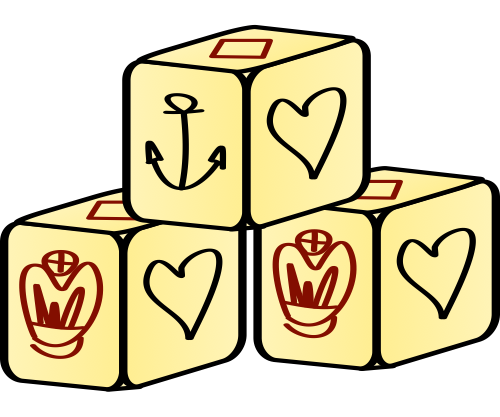
The men struck up friendships with members of the crew, whom they helped in turn by taking part in a few routine tasks. The most important concerned the running of the engines. Each day, a party of around ten sappers went down to the boiler room to assist the crew in tending the fires and handling the coal, while others helped the cooks prepare meals or did the washing-up.[19] The tunnellers laid the mess tables every day, and at ten o’clock the officers carried out an inspection to check the condition of the cutlery and kitchen utensils. The sailors introduced them to the customs of life at sea, including the well-known betting game Crown and Anchor. Jim played it from time to time.[20] A crewman, always ready for a bit of fun, would set out a board marked with an ace, a club, a spade, a diamond, a crown and an anchor. Three dice—each bearing the same six symbols—were then thrown, and Jim and the other players bet on which faces would come up. Yet the most memorable moment shared by crew and tunnellers was the crossing of the equator, which the Ruapehu reached in mid-January. Passing that symbolic line gave rise to an enduring naval ritual for novices who had never crossed it before. This “baptism” had no fixed programme, but was staged by crewmen who had already crossed the equator and who took the roles of Poseidon, god of the sea, and his wife Amphitrite, mistress of sea monsters. The Ruapehu's crew rigged up a pool inside a huge tarpaulin and set up a diving board above it. A pool was ready on deck, filled with water drawn straight from the sea. Each tunneller, one after another, received the baptism. Not all wished to take part, but crew members—helped by tunnellers, among them Jim, Lofty, George and Gerald—went in search of the hold-outs hiding aboard ship. A list was kept to ensure that no man escaped the ceremony by accident. Jim’s group had some difficulty finding the last sapper who refused to be dunked. Harder still was hauling him onto the deck, as he struggled violently. The unfortunate man could do nothing when his comrades covered him in flour and other specially prepared mixtures before throwing him into the purifying pool. Some tunnellers were even dressed as women, wearing a dress and a wide-brimmed hat as they jumped in—proof that the ceremony was far from improvised and had been eagerly anticipated by the crew. George went willingly into the “font” and splashed about for a while, spraying Gerald, who had just joined him, and the men still waiting their turn outside. NCOs and officers took part as well, briefly smoothing over the hierarchy within the company.
At Dakar,[21] Major Duigan obtained permission from the French authorities to land his men for a march through the city—on the condition that the company caused no incident. The tunnellers’ joy was plain to see as they were finally able to walk beyond the Ruapehu's deck. The New Zealanders quickly drew the attention of the whole city. A few children ran alongside them, while the settlers seemed to look on their appearance with disdain. Outside the city, the New Zealanders passed Senegalese recruits in training. Intrigued by the company’s march, the Senegalese moved closer to watch the allied soldiers go by, striking up a vigorous “Marseillaise”.[22] When it was time to re-embark on the Ruapehu, a few New Zealanders entertained the onlookers gathered on the wharf by performing a haka—the traditional Māori war dance combining gestures and chant.[23] The tunnellers spent the rest of the stop confined on board. Captain Clifford waited for the installation of a 120-mm naval gun on his ship’s deck before weighing anchor. This piece of artillery provided a means of defence against enemy submarines and surface raiders. British gunners came aboard to man it if necessary.[24]
After leaving Dakar, the Ruapehu entered the war zone. From then on, the crew and all the tunnellers were on alert—the gunners as well. German vessels had been sighted along the Moroccan and Portuguese coasts. They had already captured and sunk several Allied ships. The ocean’s surface was scanned meticulously, in the hope of spotting a periscope betraying an enemy submarine, but also any suspicious sign of mines or vessels. The enemy did not hesitate to disguise warships as ordinary transports, many of which laid mines. One night, Jim and Lofty were woken by their sergeant. A member of the crew seemed to have made out a floating mine close to the ship. Captain Clifford reacted at once and sent a distress signal. The crew went to action stations, followed by the gunners and the tunnellers, all ready to abandon ship. Yet everything seemed calm. After thirty long minutes, a British warship appeared near the Ruapehu, and the voice of an Englishman came over the ship’s wireless. Captain Clifford replied immediately that all was well and that it was most likely a false alarm. The warship departed as silently as it had come.[25] Jim and Lofty, like the rest of the men, were relieved to know they were not alone at sea and that they could rely on the Royal Navy. Above all, they knew that the captain and his sailors were watching over them. The tunnellers were fortunate nonetheless, for the German raider Moewe was indeed operating in the Ruapehu's wake. This transport, converted into a warship, captured the H.M.S. Appam while it was sailing only a few miles from the New Zealand vessel.[26]
Chapter 4
Interlude in CornwallNotes
- 1.
Imperial War Museum, Documents.11515, The First World War Memoirs of James Williamson, Part 1, f° 10, “Life on board ship was very quiet but not monotonous.”
- 2.
Ibid., Part 1, f° 10-11.
- 3.
Te Rua Mahara o te Kāwanatanga Archives New Zealand, AD 1 Box 1073 39/188, Progress reports of the New Zealand Tunnelling Company. Routing Orders, Part 1, n°73, 18 December 1915.
- 4.
Ibid., Routing Orders, Part 1, n°73 (continued), 18 December 1915.
- 5.
Christopher Pugsley, On the Fringe of Hell, New Zealanders and Military Discipline in the First World War, Auckland, Hodder & Stoughton, 1991, p. 220.
- 6.
James Campbell Neill, The New Zealand Tunnelling Company, 1915-1919, Auckland, Whitcombe & Tombs, 1922, p. 12.
- 7.
Ibid.
- 8.
Te Rua Mahara o te Kāwanatanga Archives New Zealand, AD 1 Box 1073 39/188, Progress reports…, op. cit., Voyage Report: Syllabus of lectures, f° 1.
- 9.
James Campbell Neill, The New Zealand Tunnelling Company…, op. cit., p. 13.
- 10.
Imperial War Museum, Documents.11515, The Memoirs of James Williamson…, op. cit., Part 1, f° 11, “We went South and it got very cold; saw a few icebergs but little else.”
- 11.
“Furious Fifties” are the latitudes between the 50th and 60th parallels in the Southern Ocean, where Cape Horn is located.
- 12.
James Campbell Neill, The New Zealand Tunnelling Company…, op. cit., p. 13, “… the skipper assured us that he could not remember a finer passage during his many years in the trade.”
- 13.
Imperial War Museum, Documents.11515, The Memoirs of James Williamson…, op. cit., Part 1, f° 13.
- 14.
Ibid., Part 1, f° 12.
- 15.
Te Rua Mahara o te Kāwanatanga Archives New Zealand, AD 1 Box 1073 39/188, Progress reports…, op. cit., Routing Orders, Part 1, n°93, 7 January 1916, “From and including tomorrow, the 8th . January and until the ship is under weight on leaving Montevideo, a Guard […] will mount to prevent any possible chance of damage to the ship by hostile Agents.”
- 16.
Imperial War Museum, Documents.11515, The Memoirs of James Williamson…, op. cit., Part 1, f° 10, “… the food was first class.”
- 17.
James Campbell Neill, The New Zealand Tunnelling Company…, op. cit., p. 13.
- 18.
Te Rua Mahara o te Kāwanatanga Archives New Zealand, AD 1 Box 897 25/135, Arrangements for the transport of the Main Body and the 1st Reinforcement to Great Britain. Letter from Major W.L. Robinson to G.B. Bullock, 29 October 1915.
- 19.
Te Rua Mahara o te Kāwanatanga Archives New Zealand, AD 1 Box 1073 39/188, Progress reports…, op. cit., Routing Orders, Part 2, n°65, 21 December 1915 and Routing Orders, Part 1, n°81, 26 December 1915.
- 20.
Imperial War Museum, Documents.11515, The Memoirs of James Williamson…, op. cit., Part 1, f° 11, “… there was even a Crown and Anchor board put down by one of the crew.”
- 21.
The date of arrival in Senegal is not given in any archival document, but it was certainly around the end of January 1916.
- 22.
Imperial War Museum, Documents.11515, The Memoirs of James Williamson…, op. cit., Part 1, f° 13.
- 23.
The haka is the name given to Māori war dances. These vary from tribe to tribe, but the ritual remains the same for all communities who perform it before going into battle. The haka is meant to call on the gods and ancestors to come and help the warriors in the battle ahead. New Zealand’s rugby team, the “All Blacks,” popularized it during their first matches in Europe, in 1905.
- 24.
James Campbell Neill, The New Zealand Tunnelling Company…, op. cit., p. 13.
- 25.
Imperial War Museum, Documents.11515, The Memoirs of James Williamson…, op. cit., Part 1, f° 14, “… it [a British ship] faded out of sight as silently as it had come.”
- 26.
James Campbell Neill, The New Zealand Tunnelling Company…, op. cit., p. 15, “Had the Germans known that the much more valuable Ruapehu was so close this history would never have been written”.
How to cite this page
Anthony Byledbal, “Chapter 3: The Way to War”, in Kiwis Dig Tunnels Too, New Zealand Tunnellers, 2017. Available at: