

Forging Good Soldiers
The camp’s military instructors quickly brought the tunnellers’ behaviour back under control. There would be no repeat of such misconduct. The crackdown came swiftly. Punishments were collective, the instructors made their expectations unmistakably clear, and those judged most responsible faced formal penalties. The tunnellers were required to attend classes on military discipline and the soldier’s spirit—lessons that had already been given before the leave, but which, it seems, had not been taken to heart. They were made to understand that, in donning the uniform, they would soon be representing New Zealand in Europe. Their intolerable conduct had to stop at once.
Training resumed on 15 November, where it had been left eight days earlier. The instructors had the men revise what they had learned in the first four weeks. Each tunnellers’ team had to go back over close-order drill from the basics through to marching past. George Race and Gerald Punch, Jim Williamson and Lofty Howard, and their comrades formed up in ranks and once again carried out their instructor’s commands. “Attention!”, “Stand at ease!”, “Salute!”, and the rest came in ever quicker succession. Marching was the essential component of training in November, and these revisions returned to movement—especially changes of direction. The exercises began without weapons, then continued with the Lee-Enfield rifle, the British soldier’s standard weapon.
The rifle was issued to the men after their second week at Avondale. A lesson introduced the Lee-Enfield and explained the different parts of which it was made. Knowledge of one’s weapon was essential. Adopted in 1907, the Lee-Enfield Mark III had a ten-round magazine; it was 1.10 metres long and weighed four kilograms, with an effective range of around 600 metres and a theoretical range of more than 2,700 metres.[1] A bayonet—a bladed weapon—could be fitted to the rifle’s muzzle. Before they even learned how to use it, the recruits had to know every detail. The rifle was not merely a weapon but a precision instrument of some sixty components—each one to be known, cleaned, and maintained. It was a personal bond: it could not be swapped or abandoned, and had to be kept in hand or carried slung over the shoulder at all times. After each use and before any leave, every part had to be cleaned from end to end, the work painstaking and uncompromising. The bayonet, for its part, was kept in its scabbard on the belt. For training purposes—especially for drill—a wooden replica often replaced the real Lee-Enfield.
No sooner had the rifles and bayonets been issued than the question arose of their usefulness for men largely confined to life below ground. Pick and mattock were far more useful in their hands—especially as the rifle, because of its size, could not be taken underground. Underground fighting was not comparable to that of infantrymen, but the tunnellers would still be plunged into positional warfare at the heart of the trenches. Like all soldiers, they also had to know how to shoot and defend themselves. The introduction of the rifle and bayonet chiefly altered the routine of close-order drill by adding new practices. New commands—such as “Fix bayonets!”—appeared. Handling the rifle required precise movements and behaviour depending on the situation. George and Gerald soon learned how to hold their weapon—its butt on the ground, the body of the rifle along the leg when their team fell in—and how to bring it up to the shoulder on the march.[2] They underwent inspections that checked the cleanliness of their rifles. No rust was to be visible on the metal parts. The instructor also ensured that the magazine and trigger were clean and in working order, that the sights were set to zero, and that no part was damaged or missing. Finally, he checked that the barrel was clean, oiled and unobstructed. Each man was responsible for his weapon and its condition. The aim was not simply to reprimand those whose rifles were defective, but to make the men understand that without daily care a weapon became a fragile instrument. Only a clean rifle was always ready for use. Yet this training was far from captivating George and Gerald, who had signed up to join a tunnelling company, not an infantry unit.
From 22 November onwards, the men no longer practised close-order drill in their small teams, but as full sections. The tunnelling unit had four of them, each made up of a little over seventy men. Each section was divided into three teams of around twenty sappers—the term for the ordinary soldiers in the company’s ranks—under the authority of a section headquarters. Sappers Jim Williamson and Lofty Howard were assigned to the 1st team of Section 1, commanded by Sergeant Joseph Clarke, a thirty-nine-year-old miner from Auckland. Sappers George Race and Gerald Punch, for their part, were placed in the 3rd team of Section 2, under the authority of Lieutenant Arthur Wigley, a civil engineer. All sections were placed under the command of company headquarters, led by Major Duigan, a thirty-two-year-old officer.
John Evelyn Duigan was born on 30 March 1883 in Wanganui, on the southern coast of New Zealand’s North Island. In 1899, he joined a volunteer cavalry unit and served with British forces in the South African War.[3] Wounded several times, he returned to action each time. At the end of the conflict in 1902, Duigan chose to make a career in the army.[4] The following year, he entered the New Zealand Permanent Force as a cadet and, in 1905, was promoted to lieutenant in the Engineers.[5] He then undertook training in engineering, electricity and signals in Britain. On his return to New Zealand in July 1908, he became an instructor in signals and engineering at Defence Headquarters in Wellington.[6] On 26 April 1909, Duigan married Norah Hanley in his home town of Wanganui. Two years later, he was transferred to the New Zealand Staff Corps, which oversaw the Territorial Force. Early in 1913, he began two years of training at the Quetta Staff College in India, where he showed great energy, determination and perseverance. In October 1914, he joined the headquarters of the New Zealand Expeditionary Force, and in September 1915 he was appointed to lead the new tunnelling company.[7]
With the start of section marching drills, the unit’s officers and NCOs came into their own. The instructors’ task was to guide these ranks and teach them how to command. The point was not to abuse authority, but to earn respect while respecting the men. Focused on their responsibilities, the officers sometimes lacked initiative,[8] whereas the NCOs had already been accepted by their men. Although none of them had military experience, their efforts were highly promising. The pleasant spring at the end of 1915 accompanied the tunnellers as they did their best to become good soldiers and learn as much as possible.[9] Life in camp was generally agreeable. The men were well fed, as supplies were plentiful, and they were also well housed. Only one incident disturbed this comfort: a storm that struck Auckland, flooded the tents, and forced the tunnellers to take shelter under the covered grandstands of the racecourse and in the Jockey Club buildings.[10] Discipline improved markedly—a handful of incorrigible men still managed to slip out to the local pubs, but their number was dwindling. The drill sharpened day by day, and the sappers, who had arrived at Avondale looking like anything but soldiers, were finally starting to earn the name. All ranks were serious and diligent, even if the instructors privately felt more could be done. Under such an intense programme, bodies suffered. With a touch of humour, the lesson entitled “Taking Care of Your Feet” found its place amid the increasingly demanding marching routine.
Other preparations were made ahead of departure. Every man was sent to the dentist. Captain Winstone, in charge of treatment, was dismayed by the poor dental hygiene of his patients, which for many betrayed their social condition. The workload was so heavy that civilian dentists from the New Zealand Dental Association had to be called in as reinforcements.[11] Nearly 3,000 dental procedures had to be carried out, including more than 1,100 fillings and 640 extractions. After this succession of treatments, Captain Winstone declared all the tunnellers fit to depart.
Training continued to follow the infantry model and was never adapted to the specific case of the tunnellers, for a simple reason: New Zealand had no instructor specialised in underground warfare. The War Office in London, informed of the situation, therefore undertook to organise a more appropriate course when the tunnellers arrived in Europe. In the meantime, the men practised target shooting. For Jim, who had never handled a rifle in his life, it was no easy exercise, and he missed the target several times.[12] Some, like Jim’s brother, could not hit it at all. For others, the movements soon came back. Lance Corporal Francis Clifford, who did not miss the target once, amazed Jim and his comrades. He had a clear advantage, having already served in the British Army. Even more than marksmanship, the instructors emphasised combat. They explained at length how to approach an enemy position in order to engage. The tunnellers were introduced to the various means of communication on the battlefield: shouted orders or whistles when the enemy was still at a safe distance, and messages passed from mouth to ear when speech and whistles drew too much attention. Training was rounded out with other techniques, such as advancing under enemy fire. A series of scenarios recreated the attack or defence of a position and plunged the recruits into learning how to fight across different types of terrain—open ground, woods or villages, but not trenches. Rifle fire played an important role in preparing for the bayonet charge, which came at close quarters.[13] The instructors insisted on the movement of a group rather than an individual. The attack was conducted in line, in several waves if possible, against a defence that was itself formed in line. The charging soldiers, carried forward by the force of the group, were meant to gain a moral and physical advantage over the static line of enemy troops. Yet the situation on the Western Front stood in sharp contradiction to what they were being taught on New Zealand soil. By definition, tunnellers were soldiers of positional warfare, but they were being trained for a conflict based on movement. This approach, however, was general and was not limited to the members of the tunnelling company. No changes were proposed to adapt training either to trench warfare or to the particular needs of the different branches of the army.
From the end of November, the instructors tried to drill the entire company in marching past. The exercise was repeated several times a week—and even several times a day at the beginning of December. The last two weeks at Avondale saw close-order training intensify. With departure imminent, parade drill took on new importance. The tunnellers would soon be under the gaze of civilians, of their countrymen—and, for some, of their families and loved ones. Their bearing on the day of departure had to be beyond reproach. The long hours spent on close-order drill reflected the instructors’ pursuit of perfection. The tunnellers themselves were equally determined to show a different face from that of a gang of drunkards.
Finally, after several postponements, the departure date was set for 18 December. The government, eager to dispatch its company to Europe quickly, had hoped for a departure as early as the beginning of November, and at the latest by early December. Difficulties in organising transport, however, pushed the deadline back. The army nonetheless moved quickly to secure a ship, issuing a call to the country’s shipping companies as early as the end of September. Only the New Zealand Shipping Company replied positively. A vessel was available—the S.S. Ruapehu, a steamship built in 1901—which was then at sea on its way back to the Dominion. Even so, the ship could take only the senior ranks and about 150 sappers.[14] Accommodation on board was insufficient to carry more. The company was, however, willing to negotiate the per-head transport cost in order to refit the ship and increase capacity. The army had no alternative. After consultation with the imperial government, it authorised the New Zealand Shipping Company to prepare the transport of its tunnelling company to Britain.[15] The Ruapehu did not dock in Auckland harbour until 8 December. The shipping company immediately began internal modifications to carry a number of passengers two and a half times greater than originally planned. A hospital was installed; the toilets tripled; mess rooms for the senior ranks created alongside a 400-seat canteen for the men. Third-class berths were almost tripled—from 150 to nearly 400 bunks—while the officers took the existing first-class cabins,[16] and new quarters were fitted out for the twenty-four most senior NCOs, with the rest sleeping among the sappers. The shipping company, which expected to finish the work by 15 December, had to delay departure until the 18th. Stores and supplies had not yet been loaded, and the coal bunkers still had to be filled.
At Avondale, Jim, Lofty, George, Gerald and their comrades were almost ready to depart. Their kit had been packed for several days. To prevent theft or loss, every item was marked with its owner’s service number, name, unit and section. A kit inspection was carried out at midday on 13 December to check that everything was in order and nothing had been forgotten. The following day, the tunnellers assembled on the racecourse for parade drill. On that occasion, official photographs were taken of the whole company, as well as of the NCOs and officers.[17] The programme for the last two days in camp was considerably lightened as departure approached. A lunch more substantial than usual was served on Thursday, and the afternoon was given over to the men.[18] The roll call for embarkation took place on Friday, followed by a visit from His Excellency Lord Liverpool, the Governor of New Zealand and representative of the British Crown in the Dominion.[19] Accompanied by Major Duigan, the Governor reviewed the troops and offered his warmest congratulations to all the men on the speed of their training. Yet it was not finished: training had been temporarily interrupted to prepare for departure, but would resume aboard the Ruapehu from Monday onwards.
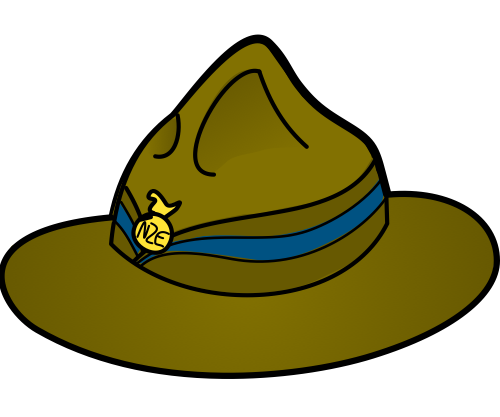
On the morning of Saturday, 18 December, after dismantling and packing away the tents, the tunnellers were assembled by section in the centre of the racecourse. The main body comprised 320 men, to whom were attached three officers of the Medical Corps, a sergeant from the Military Treasury, and twenty-two men of the Army Service Corps. The 1st Reinforcement, which sailed with the main body but would not join the trenches until later, consisted of 103 tunnellers. A Salvation Army padre was also meant to accompany them but, after quarrels, he remained in New Zealand and was not replaced. The Dominion had a high level of religious indifference: most working-class men had long since left the pews behind. Jim, who received—as all the tunnellers did—the New Testament, never opened it and left it at the bottom of his kit throughout the war.[20] The chaplain had surely been the target of jokes, or worse. In such circumstances, it was hardly surprising that no religious representative was assigned to the company. Standing in the ranks, Jim, Lofty, George and Gerald had been placed at ease behind their kitbags. Their uniforms had been cleaned and brushed for the occasion, with Engineers hats on their heads. The tunnellers were indistinguishable from other Engineer units. Their hats carried the same three-stripe puggaree worn by military engineers—two khaki bands enclosing a blue one—topped by an Engineers badge of slightly larger dimensions. The motto inscribed in Latin on the badge was the same: Quo fas et gloria ducunt–“Where duty and glory lead.” All tunnellers also wore the “NZE” shoulder title,[21] the letters denoting the New Zealand Engineers. NCOs were distinguished by a collar badge showing a grenade with ten flames stylised in the shape of fern fronds, symbolising New Zealand, together with a scroll inscribed “NZE”. Officers wore the same badge, but with the British Engineers’ Latin motto—Ubique—rendered in Māori as Inga Wahi Katoa—“Everywhere”—replacing the engineers’ initials. The assembled troops would soon strike camp. The officers were still discussing a few details of the day’s programme but had moved closer to their men. Then, at Major Duigan’s command, kitbags were shouldered and the ranks began to move forward. The tunnellers made for Avondale station, where a train carried them into central Auckland.
Before taking part in the departure ceremonies, the men left their kit aboard the Ruapehu, which at first glance seemed very comfortable.[22] The voyage had not even begun before things started to go wrong. The ship’s cooks went on strike to protest against the punishing pace of the embarkation. The tunnellers had to make do with a meagre meal of stale biscuits and cheese rations.[23] It was a hungry unit that came down to the wharves to parade through the city as far as the statue of Sir George Grey,[24] between Queen Street and Grey’s Avenue, at the foot of the town hall. The company split into two groups and took up position at the corner of the two streets, forming a kind of “V”. Major Duigan stood out in front of his men, facing a small terrace where the civil and military dignitaries had taken their places. The Union Jack flew at the base of the statue of the former Governor of New Zealand. There, the Minister of Defence, James Allen, the Mayor of Auckland, Christopher Parr, and Governor Liverpool waited to speak in turn to the men of the tunnelling company—and to the crowd gathered for the occasion. Though the tunnellers cut a fine figure in their uniforms, they were no more attentive for all that to the proceedings. Their stomachs were crying out with hunger as the officials’ tedious speeches—laden with patriotic rhetoric—followed one after another.[25] Even Second Lieutenant Neill could not help thinking that a good meal would have been far more pleasant.[26] At last came the final speaker, the Governor of New Zealand. Lord Liverpool publicly repeated the congratulations he had already offered the tunnellers during his visit to camp the previous day. On behalf of his wife, who was absent, he presented a gramophone, he said, to help pass the time during leisure hours aboard the Ruapehu.[27] He then wished Major Duigan, his officers and all the men a good voyage, expressing the hope that the ship would not encounter an enemy submarine on its route—a remark that drew smiles from the tunnellers and the crowd.[28] A cheque for £342 was handed to the major as a regimental fund. Collected by the tunnellers’ workmates across the Dominion, the sum would be used to improve the men’s comfort—by organising entertainments such as concerts or film showings, and by purchasing books or taking out magazine subscriptions for the company.[29]
On the way to the port, the public and friends warmly cheered the tunnellers on. As the company drew closer to the waterfront, the crowd grew ever denser. Onlookers pressed forward to shake the tunnellers’ hands as they passed, or simply to give them a friendly slap on the shoulder. Smiles were everywhere as the men received more and more encouragement—and gifts: cigars and, above all, beers, quickly slipped into pockets and difficult to conceal.[30] The tunnellers’ appearance made a strong impression on a public that had been so ashamed of them only a few weeks earlier.[31] On the wharf, some of the tunnellers’ relatives had come along. Jim spotted his sister’s familiar face in the crowd and hurried to her for a last embrace, while his comrades gradually boarded the Ruapehu and quickly took their places on deck to wave a final farewell to the throng. On board, the cooks’ strike had ended. The manager of the New Zealand Shipping Company, G. B. Bullock, promptly granted his employees a pay rise so as not to delay departure. Yet he did not seem able to honour that commitment. The Ruapehu had barely cast off when he asked the government to cover the wage increase. James Allen, the Minister of Defence, refused outright—especially since he had already agreed to a bonus for Captain Clifford, the Ruapehu's master, in view of the dangers of such a crossing. Bullock would not back down and, in return, sought a higher rate for transporting the third-class men. The Minister of Defence’s office appealed to the Prime Minister to judge the validity of the proposal. In the end, the offer was accepted.
Chapter 3
The Way to WarNotes
- 1.
Stéphane Audoin-Rouzeau, “L’équipement des soldats”, in Encyclopédie de la Grande Guerre 1914-1918. Histoire et culture, edited by Stéphane Audoin-Rouzeau and Jean-Jacques Becker, Paris, Bayard, 2004, p. 282.
- 2.
Infantry Training 1914, London, General Staff, War Office, 1914, p. 48-49.
- 3.
Ian McGibbon, “Duigan, John Evelyn 1883-1950” [Online]. Dictionary of New Zealand Biography [Accessed on 1 September 2010].
- 4.
Ibid.
- 5.
Te Rua Mahara o te Kāwanatanga Archives New Zealand, AABK 18805 W55307 Box 54 0035876, Military Personnel Files of John Evelyn Duigan – WWI 4/1325.
- 6.
Ibid.
- 7.
James Campbell Neill, The New Zealand Tunnelling Company, 1915-1919, Auckland, Whitcombe & Tombs, 1922, p. 8.
- 8.
Te Rua Mahara o te Kāwanatanga Archives New Zealand, AD 1 Box 1072 39/172, Training reports from Avondale Camp, 1915. Training report from 27 November to 4 December 1915, “The Officers are keen and conscientious, but in some cases, lack initiative.”
- 9.
Imperial War Museum, Documents.11515, The First World War Memoirs of James Williamson, Part 1, f° 4, “Most of us were really trying to be good soldiers and learn all we could […] I think we did very well in our efforts in getting used to discipline and being ordered around like a lot of school children.”
- 10.
James Campbell Neill, The New Zealand Tunnelling Company…, op. cit., p. 8.
- 11.
Te Rua Mahara o te Kāwanatanga Archives New Zealand, AD 1 Box 1074 39/200, Dental records, 1915.
- 12.
Imperial War Museum, Documents.11515, The Memoirs of James Williamson…, op. cit., Part 1, f° 7.
- 13.
Infantry Training…, op. cit., p. 80.
- 14.
Te Rua Mahara o te Kāwanatanga Archives New Zealand, AD 1 Box 897 25/135, Arrangements for the transport of the Main Body and the 1st Reinforcement to Great Britain. Letter from the New Zealand Shipping Company to the headquarters of the New Zealand Military Forces, 4 October 1915.
- 15.
Ibid., Letter from the headquarters of the New Zealand Military Forces to the New Zealand Shipping Company, 9 October 1915.
- 16.
Ibid., Letter from Major W. L. Robinson, representative of the New Zealand Military Forces, to the New Zealand Shipping Company, 29 October 1915.
- 17.
Ibid.
- 18.
Ibid.
- 19.
Ibid.
- 20.
Imperial War Museum, Documents.11515, The Memoirs of James Williamson…, op. cit., Part 1, f° 8.
- 21.
NZE: “New Zealand Engineers”, the engineering corps.
- 22.
James Campbell Neill, The New Zealand Tunnelling Company…, op. cit., p. 11.
- 23.
Imperial War Museum, Documents.11515, The Memoirs of James Williamson…, op. cit., Part 1, f° 9, “Going on to the good ship ‘Ruapehu,’ we found every thing fitted up alright. The only thing wrong was that the cooks etc were on strike and we could not get any lunch. We had to be satisfied with biscuits and tea.”
- 24.
Sir George Grey (1812–1898) was a major figure in New Zealand’s colonial history. He served twice as Governor of New Zealand, from 1845 to 1853 and from 1861 to 1868. Grey supported colonial expansion as a way to alleviate poverty in England and Ireland. He was a strong advocate of cultural assimilation between different peoples. In New Zealand, he actively promoted the Europeanization of the Māori and an understanding of Māori culture.
- 25.
Imperial War Museum, Documents.11515, The Memoirs of James Williamson…, op. cit., Part 1, f° 9, “… we marched to the Town Hall to listen to some one telling us the old story. ‘Heroes’ going away to uphold the credit of New Zealand Overseas and what was going to be done when we got back etc etc; same old baloney was still being told to all the men going away in the last war.”
- 26.
James Campbell Neill, The New Zealand Tunnelling Company…, op. cit., p. 10.
- 27.
Ashburton Guardian, 20 December 1915, p. 6, “… which she hopes will help to while away some of your leisure hours at sea.”
- 28.
Poverty Bay Herald, 18 December 1915, p. 6.
- 29.
Thames Star, 20 December 1915, p. 4.
- 30.
Imperial War Museum, Documents.11515, The Memoirs of James Williamson…, op. cit., Part 1, f° 10, “…we marched down Queen Street to the boat. We got quite a good hand on the way down and had plenty of beer and cigarettes handed to us”.
- 31.
Evening Post, 20 December 1915, p. 2, “The Tunnelling Company marched through the streets yesterday. The appearance of the men made a very "favourable impression upon the crowd in the streets.”
How to cite this page
Anthony Byledbal, “Chapter 2: Forging Good Soldiers”, in Kiwis Dig Tunnels Too, New Zealand Tunnellers, 2017. Available at: